PP Pueblo Cabinet PaintingPueblo, CO
Pueblo, CO

Cabinet Painting & Refinishing in Pueblo

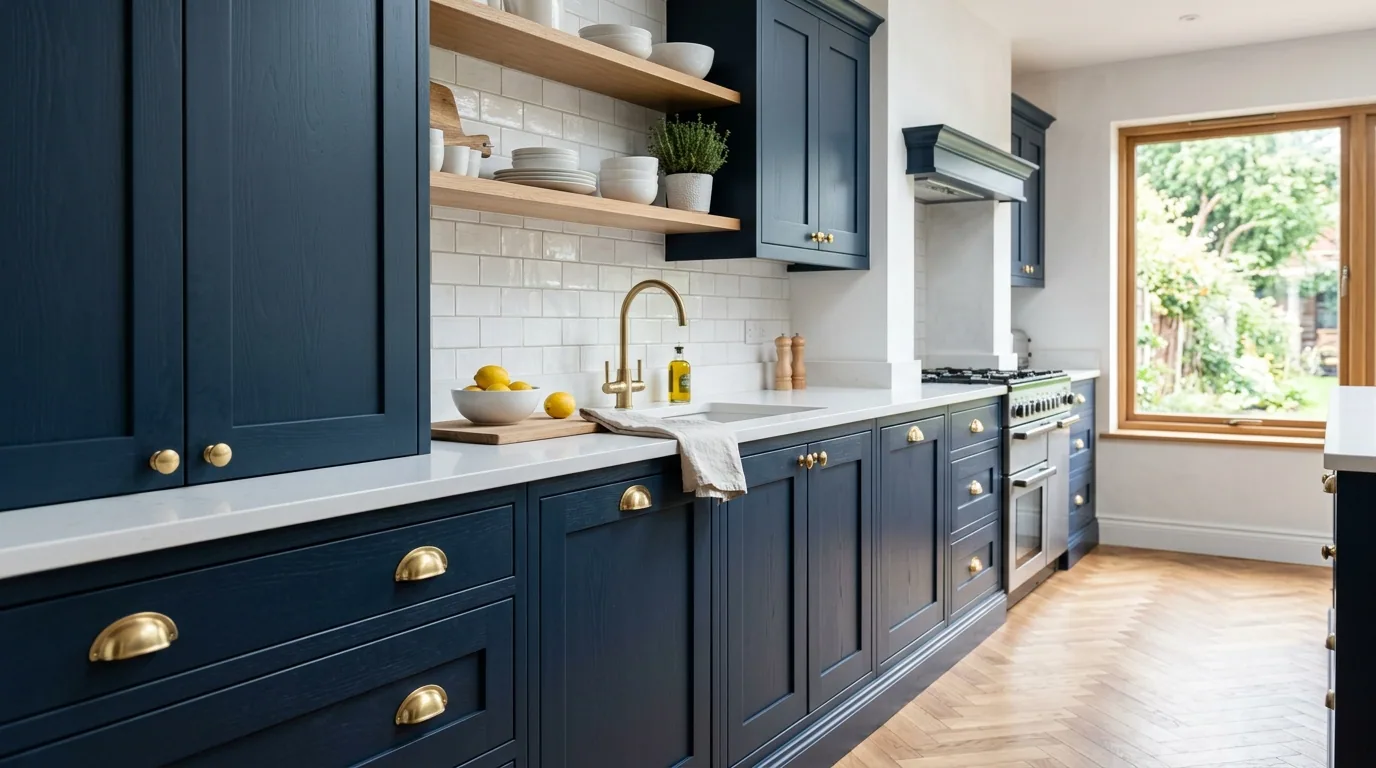
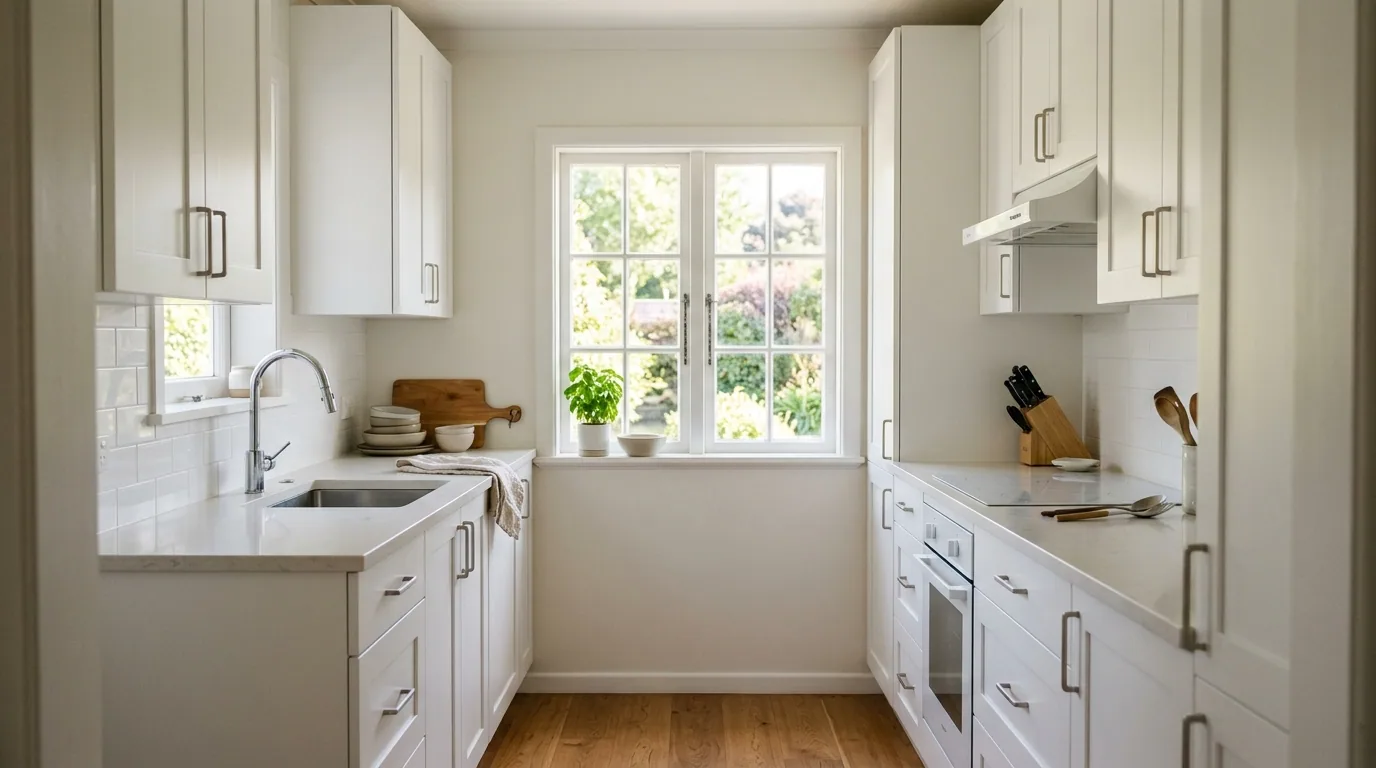
Refinishing existing kitchen and bath cabinetry: doors and drawer fronts stripped, sanded, primed, and sprayed with a hard cabinet-grade coating. For boxes that are structurally sound but dated, yellowed, or worn at the touch points.

Calls go straight to the local company that does this work. No call center, no fee to you.

Get a quote on your project

Tell us what you need. We pass it to the local company we work with, usually the same business day.

Give us a phone number or an email so someone can reach you. By sending this you agree we may share it with the local company that does this work so they can contact you about the project. We do not sell your information. Not for emergencies — call 911.

The short version

Cabinet Painting & Refinishing, explained

The decision is almost always painting versus replacing, and it turns on the boxes. If the cabinet carcasses are solid, square, and laid out the way you want the kitchen to work, painting keeps the part that costs the most to replace and changes the part you actually look at. Published national ranges put a painted kitchen at roughly a fifth to a third of new cabinetry for a comparable footprint.

The finish is where the money goes. Cabinet doors get handled thousands of times a year and hit with grease, water, and cleaners, so a wall-paint finish fails within a season. Real cabinet work means degreasing, scuff-sanding to break the factory sheen, a bonding primer chosen for the substrate, and two thin sprayed coats of a catalyzed or waterborne alkyd enamel that cures hard over several weeks.

Cabinet Painting & Refinishing — typical work profile.

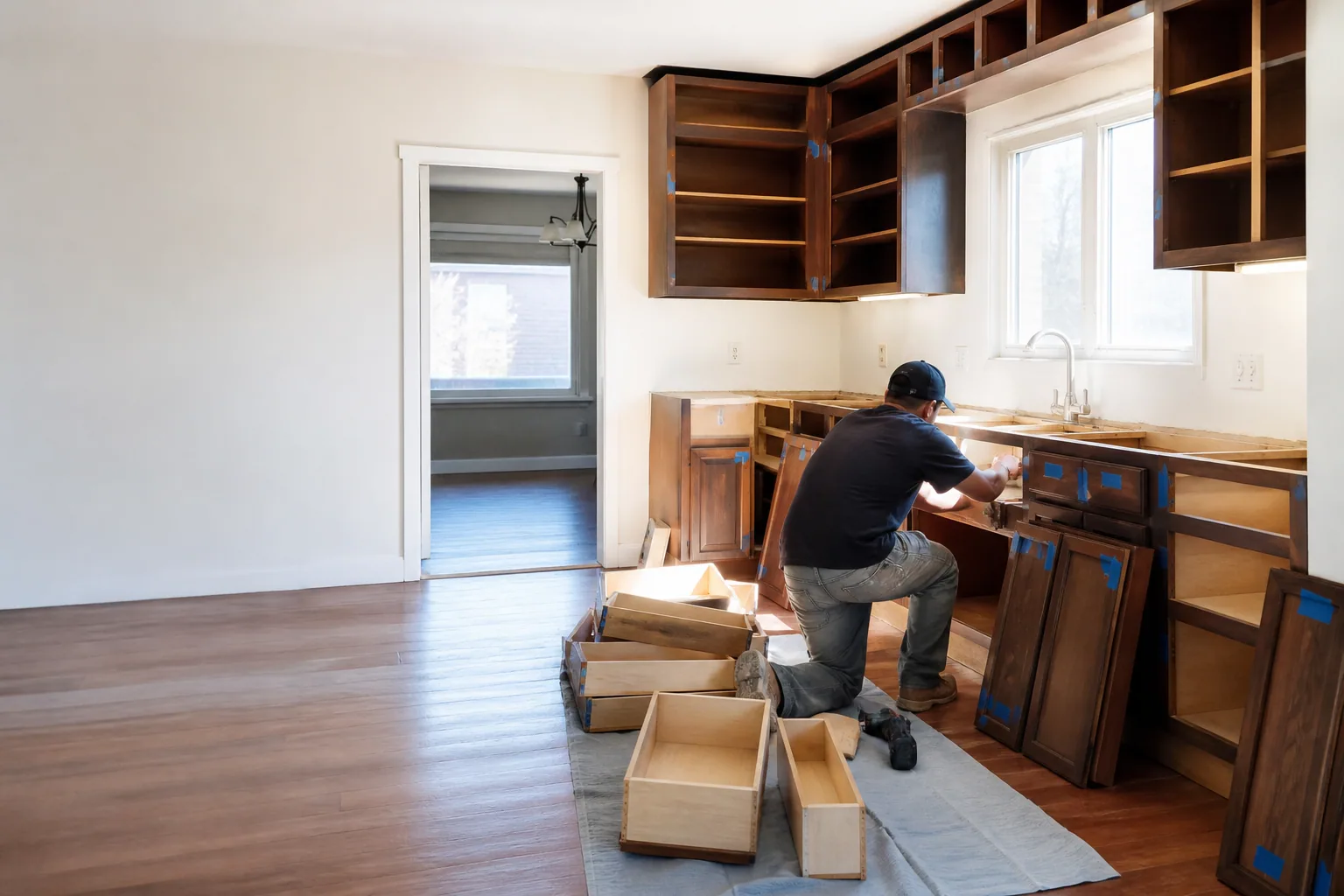
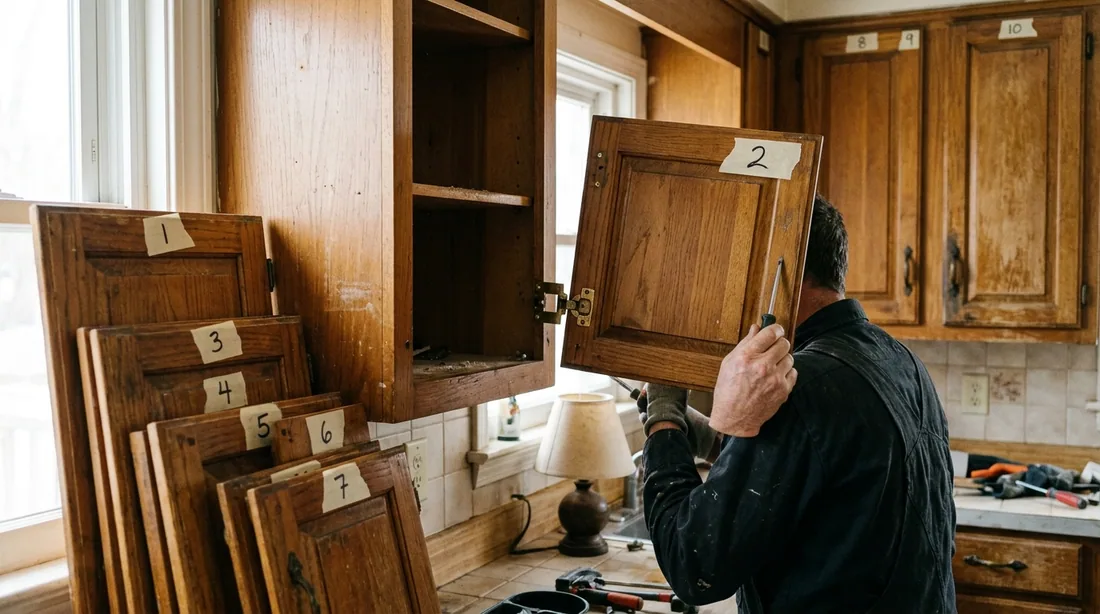
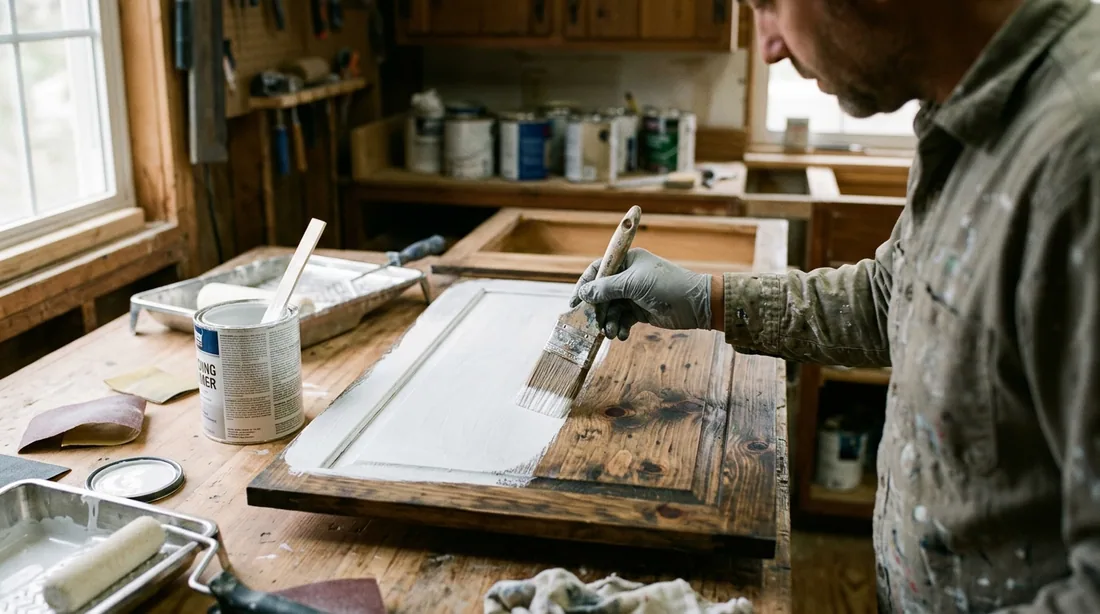
Removal and labeling

Every door, drawer front, hinge, and pull comes off and gets numbered so it returns to the exact opening it came from. Boxes rarely stay perfectly square over decades.

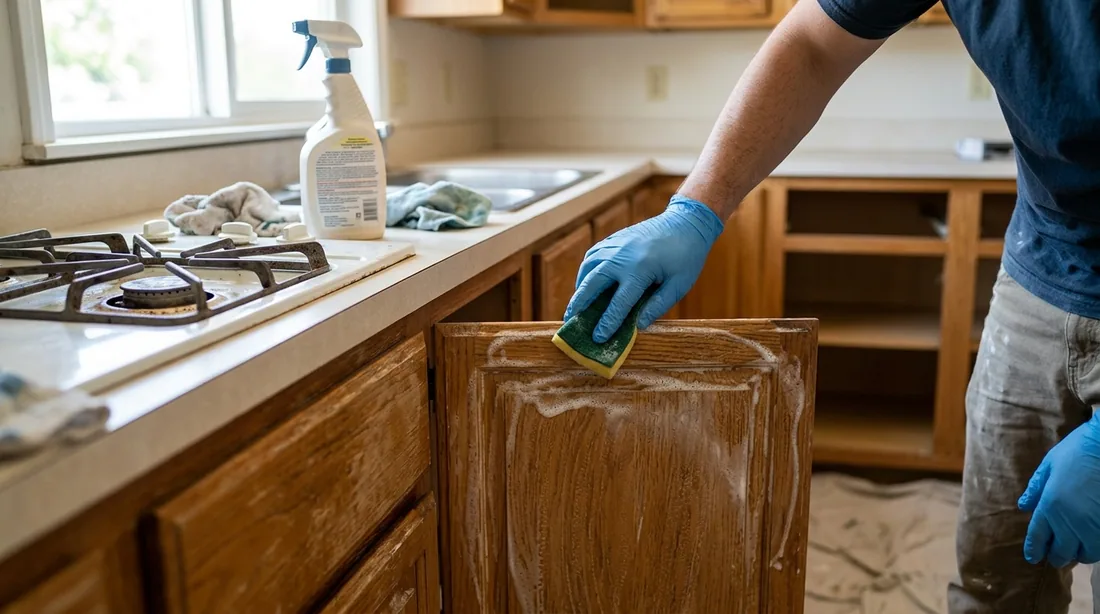
Degrease and deglaze

Cabinets near a cooktop carry a film of cooking oil that no primer will stick through. Surfaces get washed with a degreaser, rinsed, then scuff-sanded to kill the factory sheen.

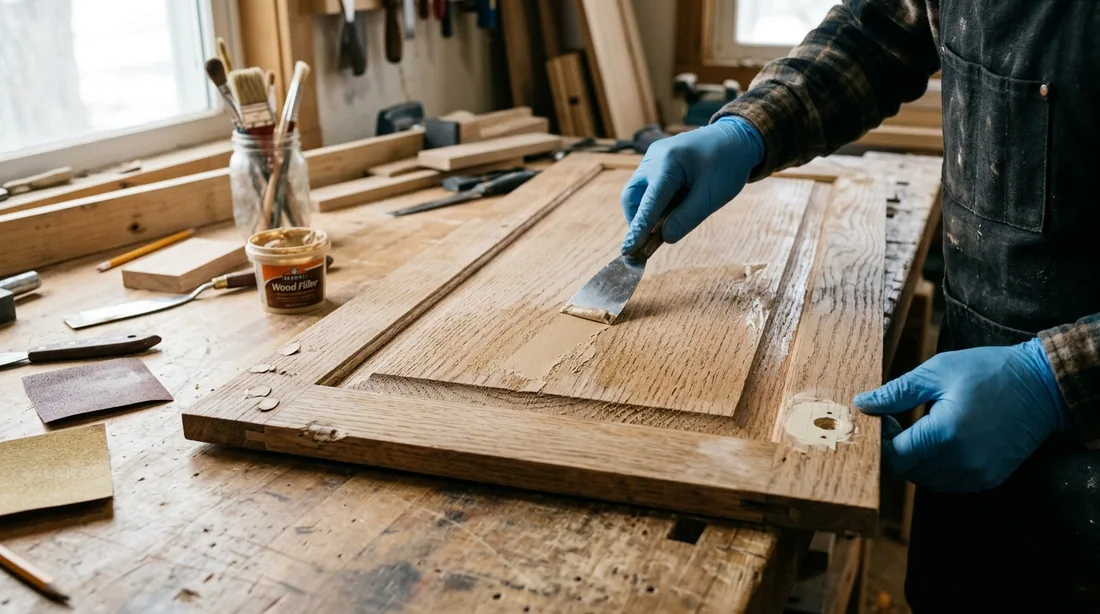
Repairs and grain filling

Loose joints, chipped edges, and blown-out screw holes get fixed first. On oak, open grain is filled if you want a smooth painted face instead of visible grain texture.

Bonding primer

The primer is picked for the substrate: shellac or a bonding primer over knotty wood and old stain, a specialty adhesion primer over thermofoil, melamine, or laminate fronts.

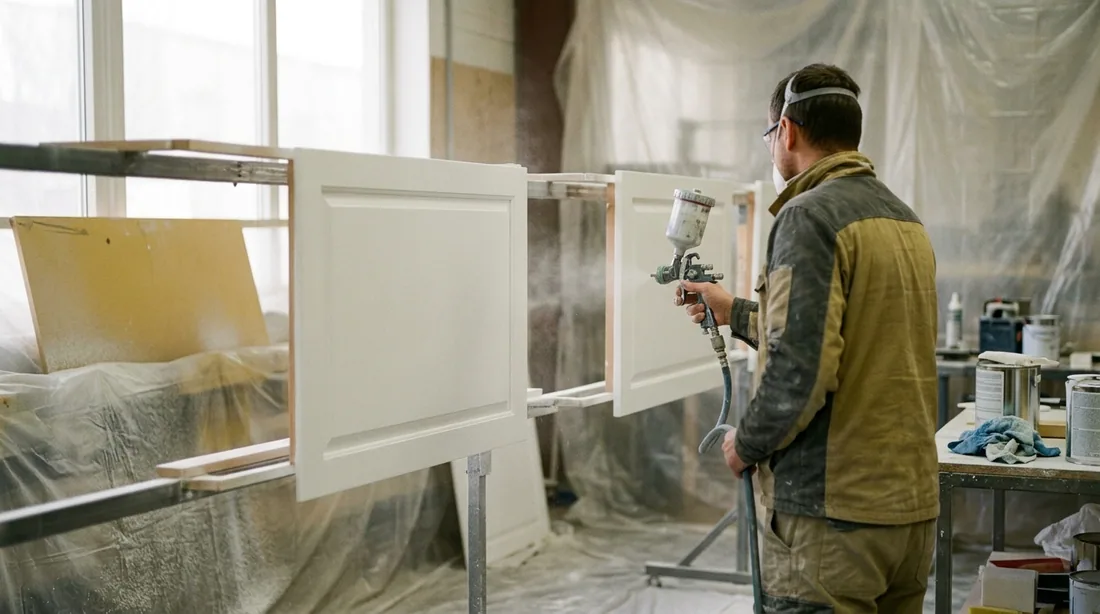
Sprayed topcoats

Doors are sprayed flat in a controlled area, two thin coats with a light sand between. Spraying is what removes brush marks and gets close to a factory-looking surface.

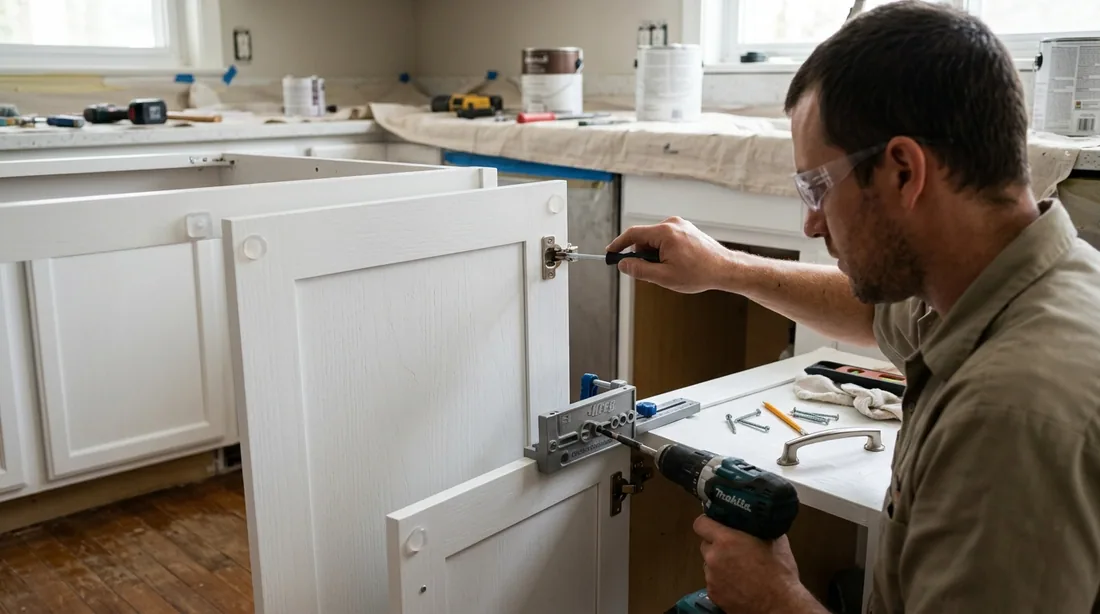
Reinstallation and adjustment

Doors go back on, hinges are adjusted so reveals line up, and new hardware is drilled from a jig. Bumper pads keep fresh finish from sticking to the frame.

Budgeting

What it costs

The published national average lands near $4,000 for a typical kitchen. These figures assume sound boxes and no structural repair. Cabinet repairs run $150 to $500 and hardware installation $100 to $1,000 on top. Anyone quoting without opening a door and checking whether the fronts are wood, thermofoil, or laminate is guessing.

$2,500$5,000$7,500$10,000Small kitchen, 70-100 sq ft of cabinet surface$1,000–$3,500Mid-size kitchen, 100-200 sq ft of cabinet surface$3,500–$7,000Large kitchen with island, 200+ sq ft$5,000–$10,000most projects land here
Typical ranges, per kitchen. The dot marks where most projects land; the bar is the full spread we found. These are planning figures, not a quote.
ScopeTypical rangeMost common
Small kitchen, 70-100 sq ft of cabinet surface$1,000 – $3,500$2,250
Mid-size kitchen, 100-200 sq ft of cabinet surface$3,500 – $7,000$5,250
Large kitchen with island, 200+ sq ft$5,000 – $10,000$7,500

Ranges compiled from Fixr, Homewyse. Reviewed 2026-07-18.

Pueblo specifics

What is different about this work in Pueblo

Local climate and building stock change how this job is specified. These figures come from the Census Bureau and NOAA climate normals for Pueblo.

  • Cabinets in housing built around 1966 are worth opening a door on before you take quotes, because solid wood face frames from older builds take paint readily while the thermofoil and melamine fronts common in later construction need a specialty adhesion primer or they peel at the edges within a year.
  • Where the median home is worth about $230,900, painting is usually the right call because it lands at a fraction of new cabinetry, but at the top of any local market buyers start reading a painted finish as a repair rather than a renovation, and the return narrows.

More on local conditions →

Scoping

Do you actually need this done?

The most expensive mistake is paying for the wrong scope. Here is how the usual symptoms sort out.

What you are seeing, and what it usually meansPaint peels insheets at dooredgesThermofoil orlaminate was coatedwithout an adhesionprimerYellow or brownstains bleedthrough white paintTannin or old stainmigrating; needed ashellac-basedblocking primerDoors stick to theframe months laterCoating never fullycured, or bumperswere left offBoxes sag ordrawers bind beforepaintingStructural problem;painting will notfix it and hides it
Common starting points. An on-site look is what settles it.

Process

How the job runs

  1. Inspection and substrate check

    A door comes off and gets examined at the edge to identify wood, MDF, thermofoil, or laminate. That single check determines the primer, the risk, and a large share of the price.

  2. Containment and removal

    Plastic sheeting seals the kitchen from the rest of the house, countertops and floors are covered, and doors and hardware come off and get labeled before any sanding starts.

  3. Clean, sand, and repair

    Degreasing comes first because sanding a greasy surface grinds oil into the wood. Then scuff-sanding, filling of dents and old hardware holes, and grain filling if the finish calls for it.

  4. Prime and spray

    A bonding primer is applied and sanded smooth, then two thin topcoats go on with light sanding between. Doors dry flat on racks so the coating levels instead of running at the edges.

  5. Reinstall and cure

    Doors return to their labeled openings, hinges get adjusted for even reveals, and bumpers go on. The finish is usable in days but keeps hardening for two to four weeks.

Common questions

Questions people ask

How long do painted kitchen cabinets last?

A properly prepped and sprayed job with a cabinet-grade coating typically holds up eight to fifteen years before it needs attention, and the first wear shows at the touch points around the sink and trash pull-out. Poor prep is what shortens that, not the paint. Touch-up on individual doors is straightforward if you keep leftover material labeled.

Can laminate or thermofoil cabinets be painted?

Yes, with a specialty adhesion primer, and with more risk than wood. Thermofoil is a vinyl skin heat-bonded to MDF, and where that skin is already lifting at a corner, paint will not reattach it. Loose skin has to be removed or the door replaced first. Expect a narrower warranty on these.

Is it cheaper to paint or replace kitchen cabinets?

Painting is substantially cheaper. Published ranges put a painted kitchen at roughly $1,000 to $10,000 depending on size, against considerably more for new cabinetry plus demolition, countertop removal, and often new flooring where the old boxes sat. Replacement makes sense when you are changing the layout or when the boxes themselves have failed.

How long will my kitchen be unusable?

Plan on three to seven days for a typical kitchen, longer if interiors are included or if doors are sprayed off-site. Boxes are usually done in place over one or two days, so the sink and appliances come back quickly. The doors are the long pole because each coat needs to dry flat before the next.

Do I have to sand cabinets before painting, or is a liquid deglosser enough?

Mechanical scuff-sanding gives the most reliable bond and also flattens the surface, which a liquid deglosser cannot do. Deglossers have a place on heavily profiled doors where sanding cannot reach into the routing. On flat surfaces, a job sold as no-sanding is trading a few hours of labor for the durability you are paying for.

Full detail on how this work is done →

Next step

Get a real number for your project

Ranges only go so far. Someone has to look at the actual job.

What this site is

Pueblo Cabinet Painting is a referral site, not a contractor. We do not hold a license, own a truck, or send a crew. We research cabinet painting pricing and practice, publish what we find, and hand your request to the local company we work with in Pueblo.

That company quotes, schedules, and stands behind its own work, and it contracts with you directly. We do not mark up the price, and you pay us nothing.

Send your project details

Goes to the local company that does this work.

Give us a phone number or an email so someone can reach you. By sending this you agree we may share it with the local company that does this work so they can contact you about the project. We do not sell your information. Not for emergencies — call 911.

Call (719) 388-1800Send details